
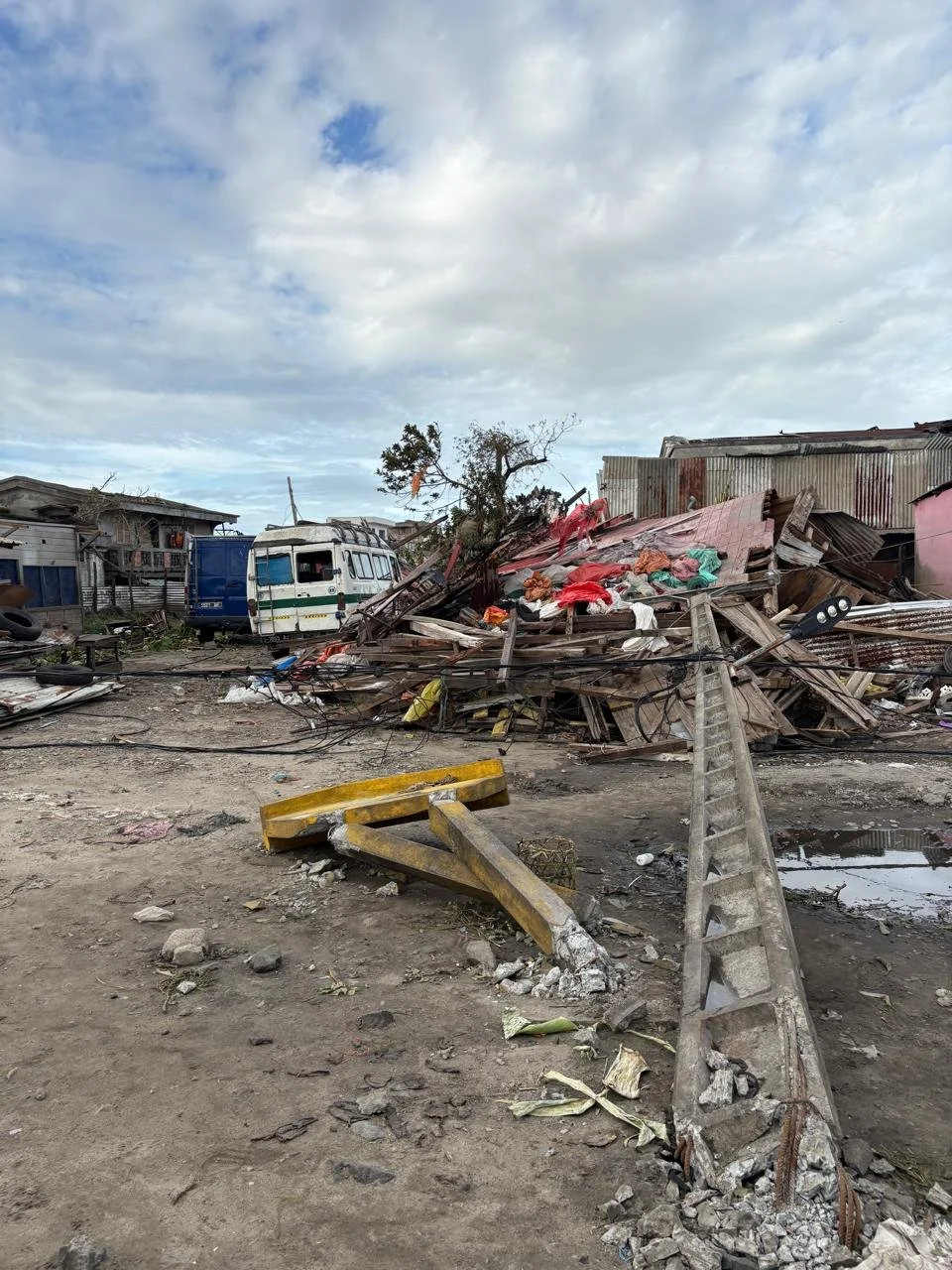
Destruction without discrimination
By Brother Edwin Joseph
Why is nature so violent against some of the poorest people on the planet?
That question kept echoing in my heart as Cyclone Gezani battered our city.
We, the brothers—living in what we believed was a well-protected house—spent a sleepless night. The storm began in the evening. At first, it was only the whistle of the wind. Then it grew into a scream. The walls trembled. Windows shook like frightened children. It was a terrifying experience to feel the speed and fury of the wind, as if the air itself had become a weapon.
Suddenly, we heard shouting outside. The neighbor’s roof was flying away—sheets of metal lifted like paper and carried into the darkness. The coconut tree in the yard, proud and tall, the kind that is supposed to resist cyclones, bent… struggled… and then fell flat on the ground. If such a tree could not stand, what could?
After a short, deceptive silence of about an hour, the winds returned—more violent, more determined. Again, we heard the crashing, the tearing, the metallic cries of roof sheets ripped away and thrown across the night. It was as if the city was being dismantled piece by piece.
And I thought of the millions living in humble settlements—families without solid roofs, hiding behind whatever they could find to shield themselves from the rain and the massive winds. If we were afraid inside our concrete walls, what of those whose only protection was hope?
By early morning, the winds had stopped. The silence was heavy. But life—Madagascar life—was already moving.
People from neighboring quartiers were out, searching through debris, collecting the scattered roof sheets. For some, it meant a little quick money. In the morning light, I saw small shops with weighing machines set up to buy the twisted metal. An economy born in the turbulence of nature. Even little children were helping, dragging pieces of tin almost as big as themselves. Survival has no age.
We took the car to go to our school after hearing that several classrooms had been damaged. But just a few meters from our gate, we were told vehicles could not pass. Trees and electric posts had fallen across the road, blocking everything. So the brothers decided to walk.
I chose another path, heading toward the main city—Place de l’Indépendance, Boulevard Joffre, the hospital, the seaside. What I saw there left me speechless.
Destruction without discrimination.
The poor and the rich—both were victims. Large institutions, offices newly constructed, were shattered. Elegant palm trees that had stood for decades in the Place de l’Indépendance—witnesses of history, symbols of dignity—were uprooted and lying helpless on the ground. A phenomenon almost incomprehensible.
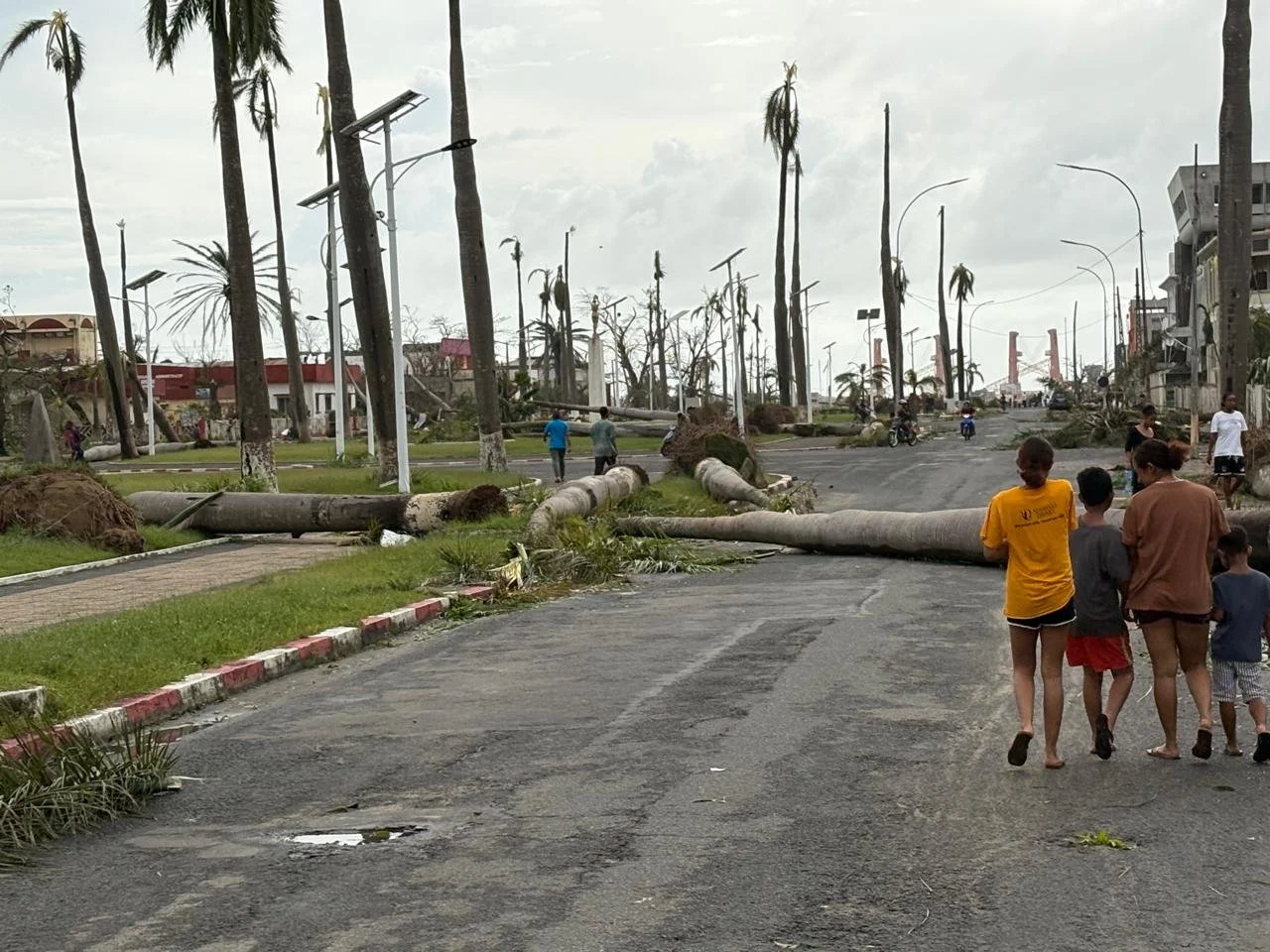
Place de l’Indépendance, after the storm
The big shops. The small street vendors. Everyone was touched.
Mme. Nirina, our cook, told us her story. Only two months ago she had repaired her house with a loan of two million Ariary. This morning, when she went to see it, there was nothing left. No walls. No roof. Just emptiness. Everything was gone.
Some elders say they have never seen such a destructive cyclone. In my 26 years, I have never witnessed one like this.
Electricity, they say, may take weeks to restore, even with JIRAMA teams coming from other regions. Airtel is completely off. As I write, communication is almost impossible. We hope at least that the lines of connection will soon be reestablished—because in moments like this, to hear a voice is to feel less alone.
Seven hours.
Seven hours of nature’s drama have left deaths, homelessness, and families who lost in one night what they had earned over years of sacrifice.
And yet, as I walked through the broken streets, I also saw something else.
I saw people helping each other lift fallen beams. I saw strangers sharing water. I saw children still smiling as they carried pieces of metal. I saw brothers walking calmly toward a damaged school, ready to begin again.
The wind may have torn our roofs, uprooted our trees, silenced our networks—but it did not uproot our solidarity.
Perhaps that is our quiet strength.
Cyclone Gezani has written a painful chapter in our history. But it has also reminded us that even in the poorest corners of the planet, even under the most violent winds, the human heart still stands.
And that, no storm can destroy.
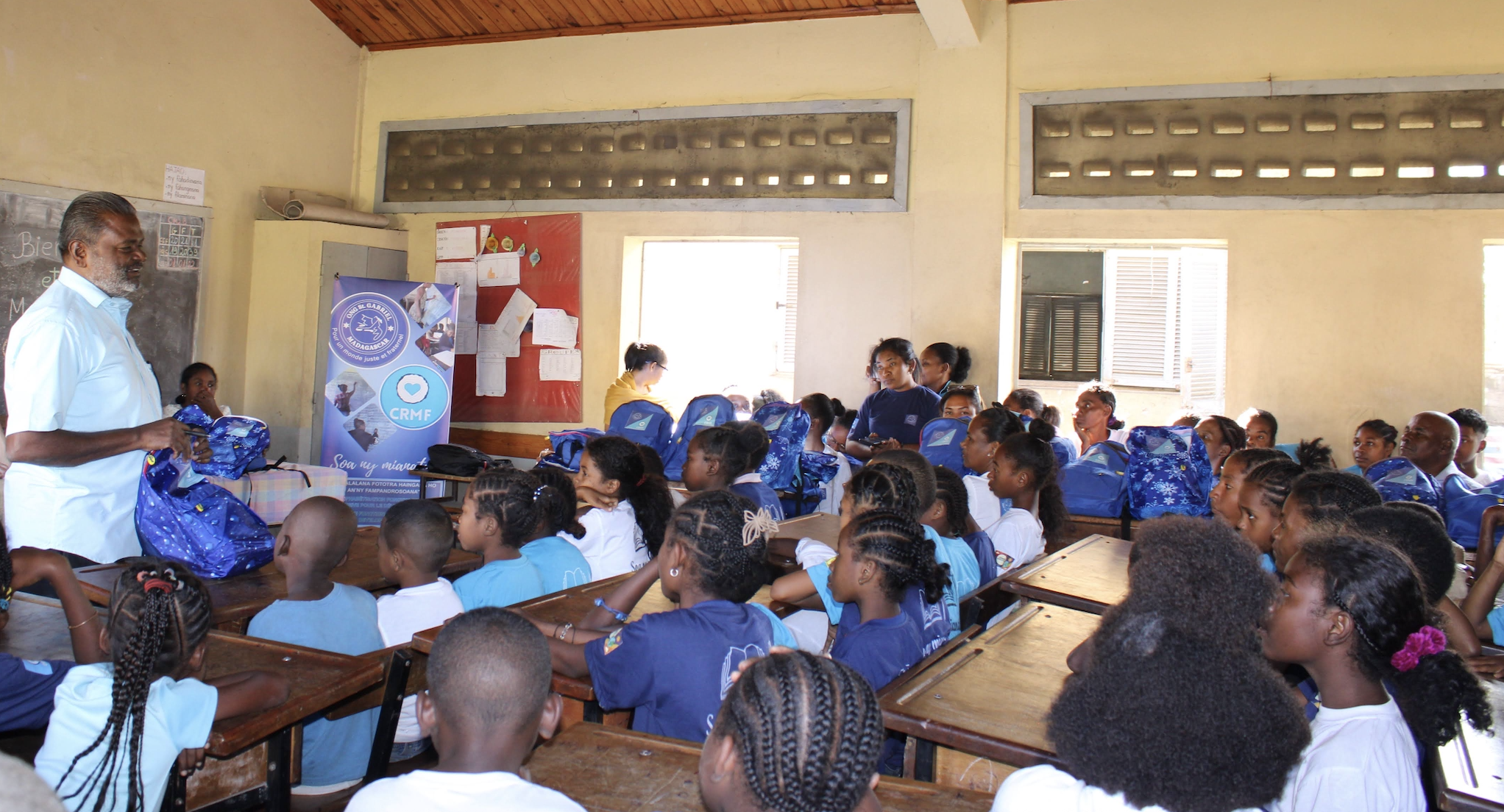
Brother Edwin Joseph in the classroom, September 2025