
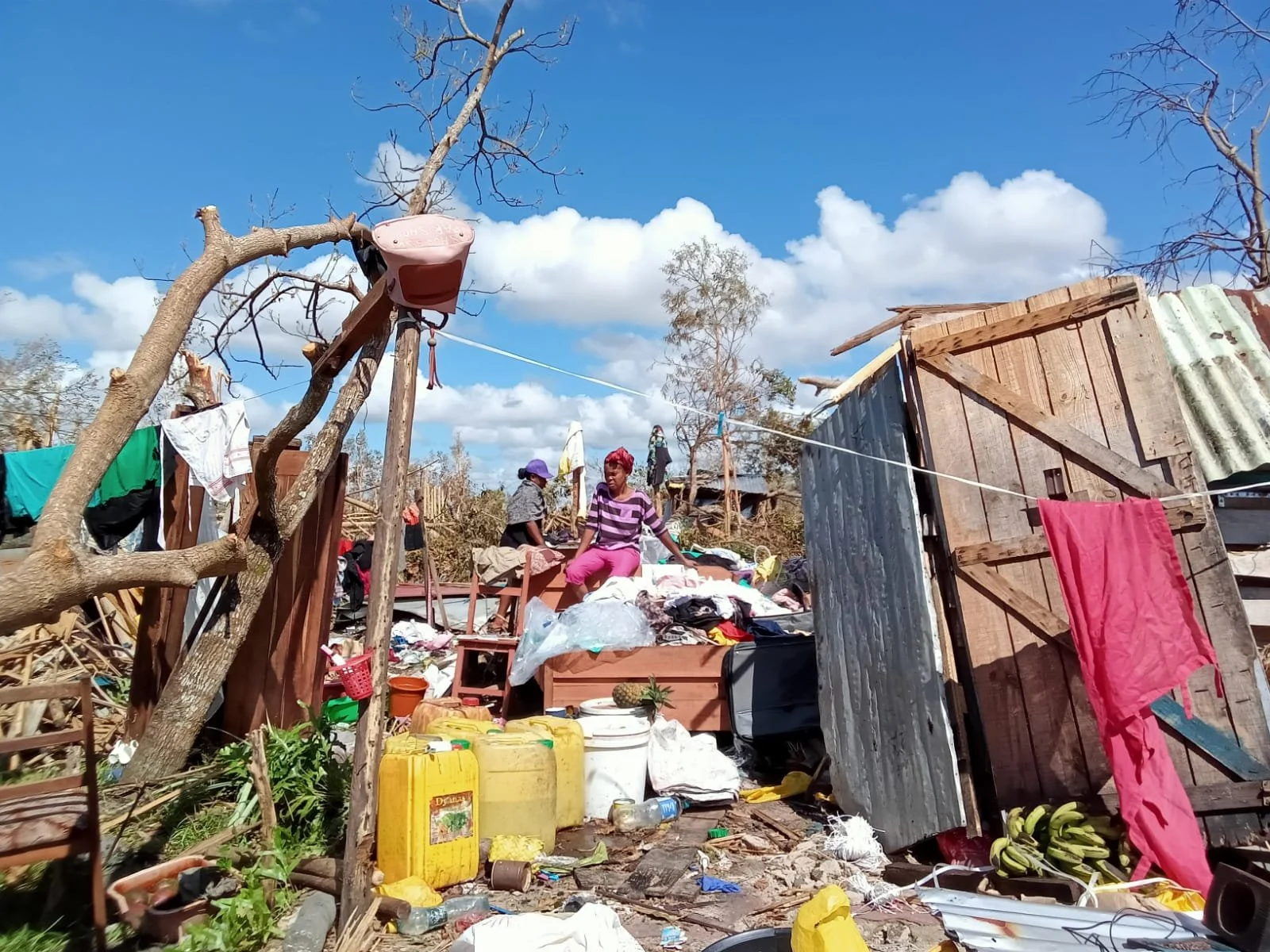
Gezani Relief Expands To Women Entrepreneurs
Dispatches from CRMF’s partner, ONG St. Gabriel
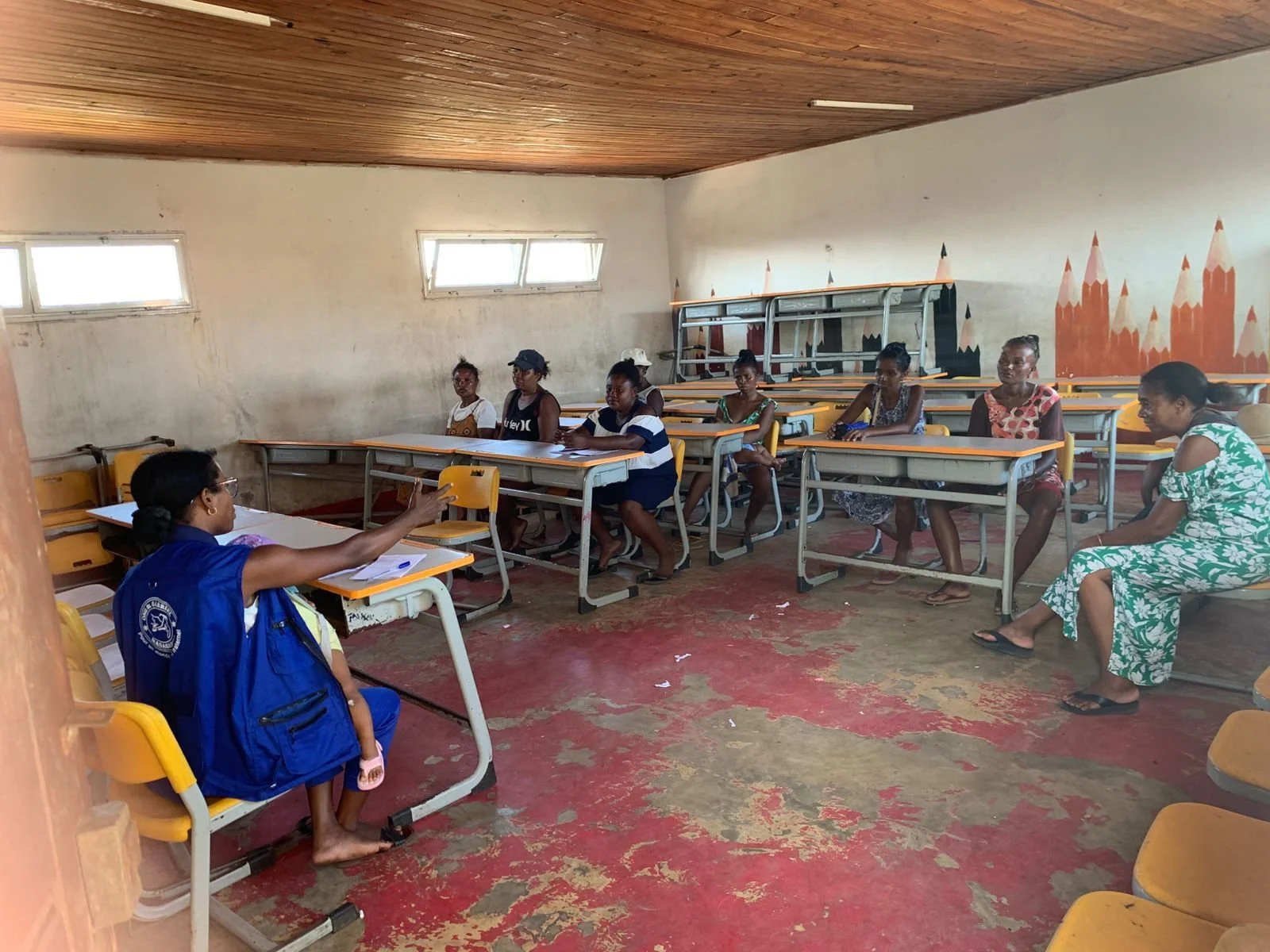
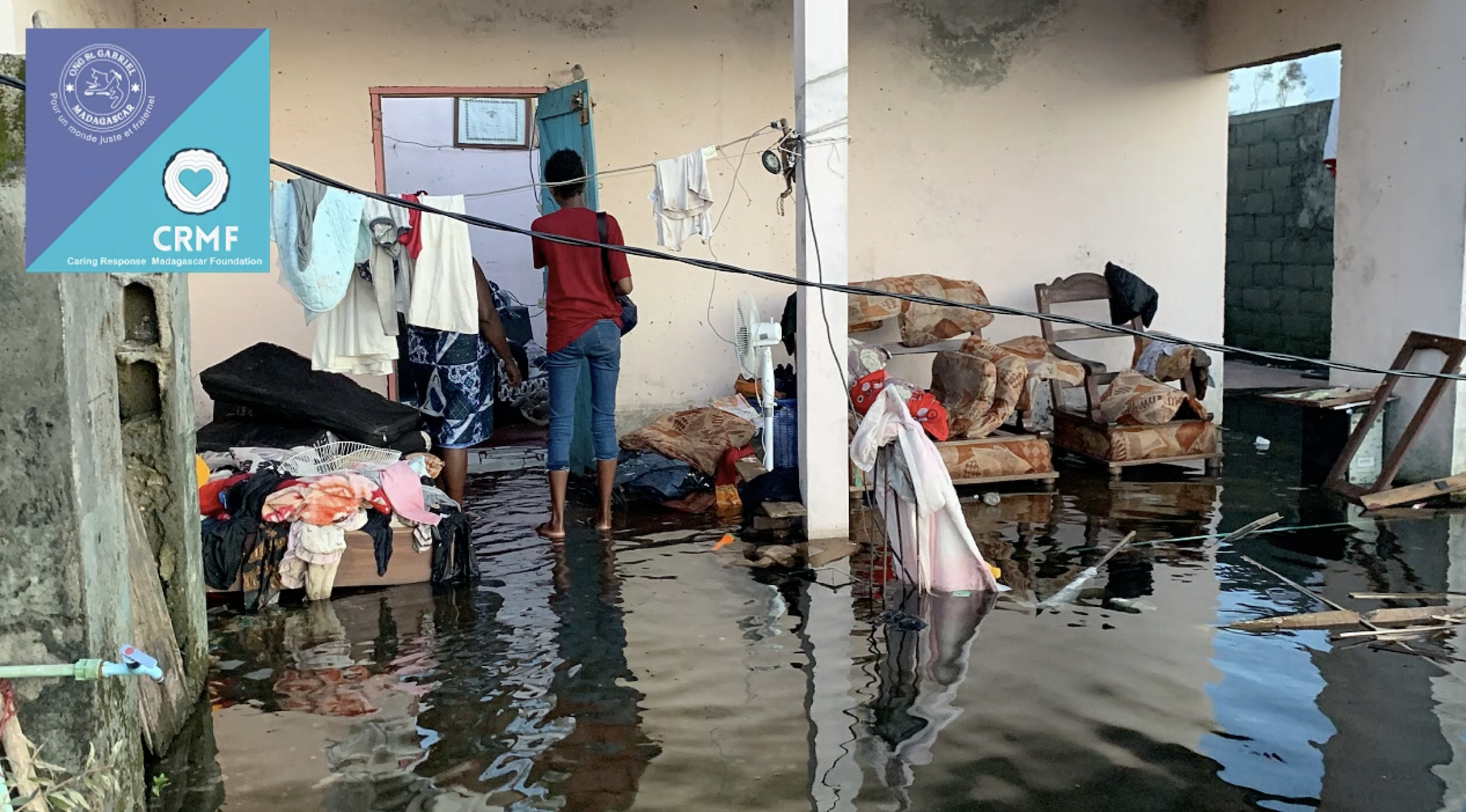
Self-Help Group Vonona members meet after the storm
A pillar of CRMF’s outreach in Toamasina, the Self-Help Group program focuses on nurturing income-generating activities among economically vulnerable women.
The women who participate in these Self-Help Groups have been particularly hard-hit by Cyclone Gezani. Beyond the hardships the storm foisted on their homes and within their families, many also have faced severe disruptions to their income-generating activities.
Our partners have worked diligently to support their recovery. After initially evaluating staff members affected by the cyclone, local teams expanded outreach to Self-Help Groups in and around Toamasina.
In the weeks following Cyclone Gezani’s assault, ONG St. Gabriel conducted field visits and began assessments of dozens of Self-Help Groups, comprising hundreds of women in rural and urban areas.
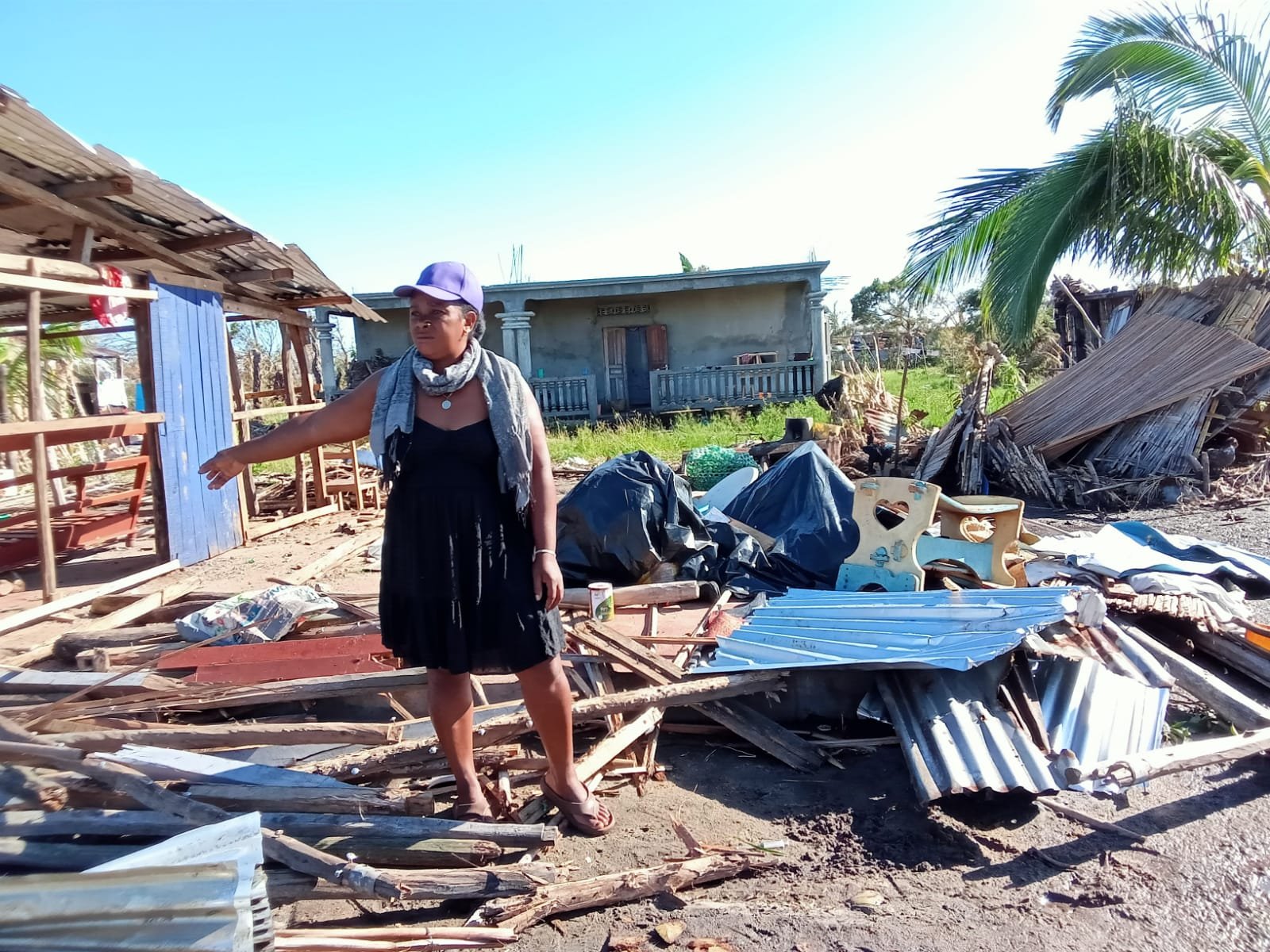
Madame Anitha José, Treasurer of SHG Fanasina Tsararivotra: “The cyclone completely destroyed our sources of income and our entire life at home. The furniture, our belongings, everything is gone. Today, we are lost and disoriented. We are alive, yes, but we do not know where to go or how to start again. Our daily work, our livelihood, has been wiped out. We do not know when we will recover. For now, we are simply here… in uncertainty.”
Many of these groups have proposed plans to begin anew income-generating activities such as chicken, pig and duck farming. Others have begun the process of rebuilding their businesses, working to overcome the destruction of equipment, inventory and shops.
Members of SHG Finoana plan to strengthen their collective income-generating activities, particularly the production and marketing of packaged chili and chips, as part of their economic recovery strategy.
SHG Vonona members expressed a commitment to relaunch their collective poultry business after the cyclone destroyed an incubator and their eggs. Despite these losses, the group remains determined to move forward.
SHG Karetsika plans to relaunch chicken farming, while SHG Mahasoa will prioritize the relaunch of banana-chip production and banana-flour processing, despite the destruction of their sales outlet.
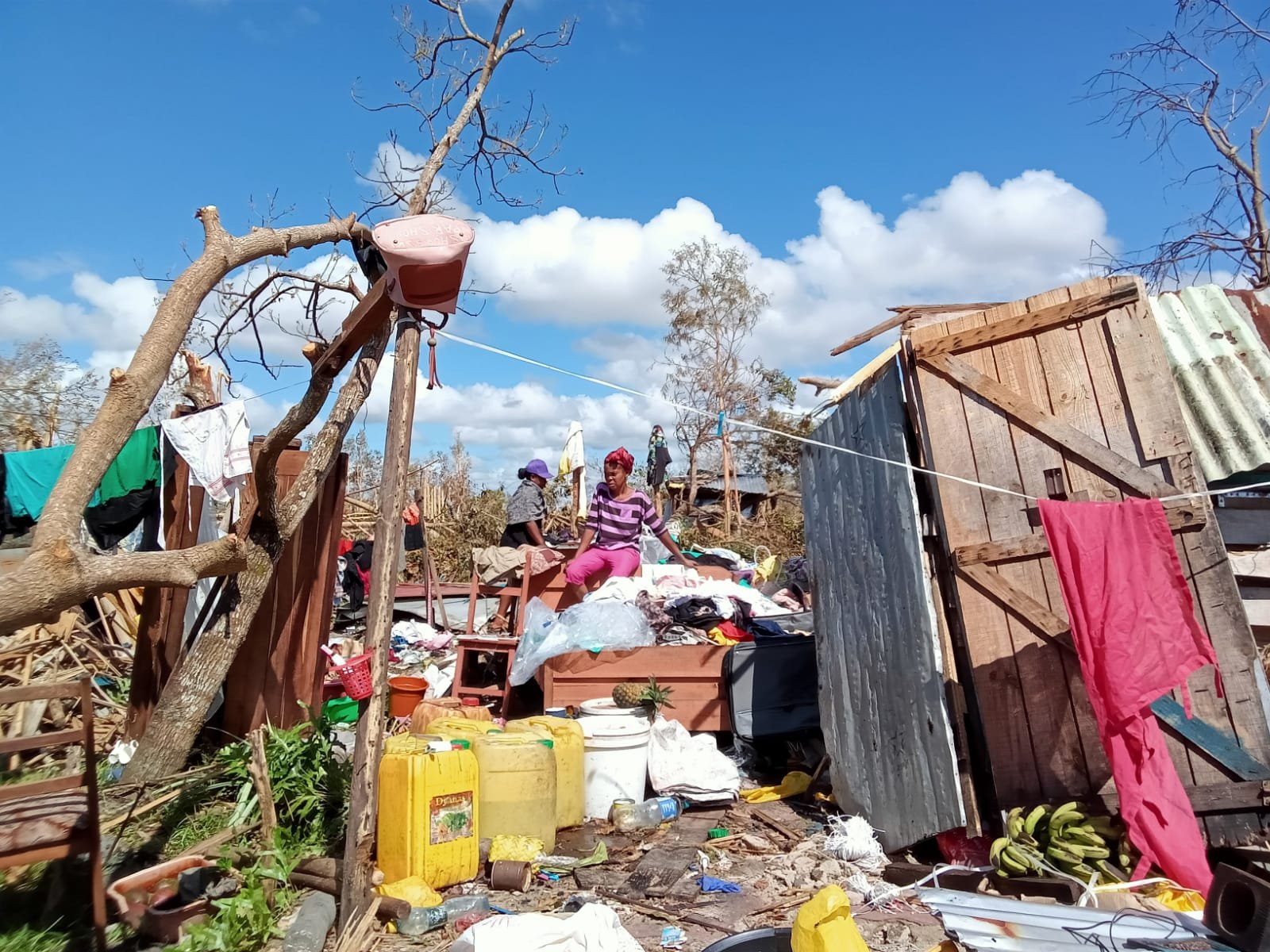
Member of an urban Self-Help Group: “We thank God that we are still alive after the cyclone. But look at what happened to us. When the winds became violent, we had to flee. During that time, our belongings were looted. The few valuable things we had—a bicycle, stored rice, a little money—everything disappeared. Today, we have no shelter. We could save nothing. And until now, we are not even able to return to work.”
Proposals among Self-Help Groups to rebuild their varied money-generating endeavors include livestock purchases, equipment repair and shop reconstruction. Support for these women will blend collective assistance and individual support.
Outreach shows a strong will among these tight-knit groups to rebuild their livelihoods. Field assessments point to the need for flexible, differentiated support—combining targeted financial assistance, technical guidance and structured follow-through—to strengthen these SHG-led recovery efforts.
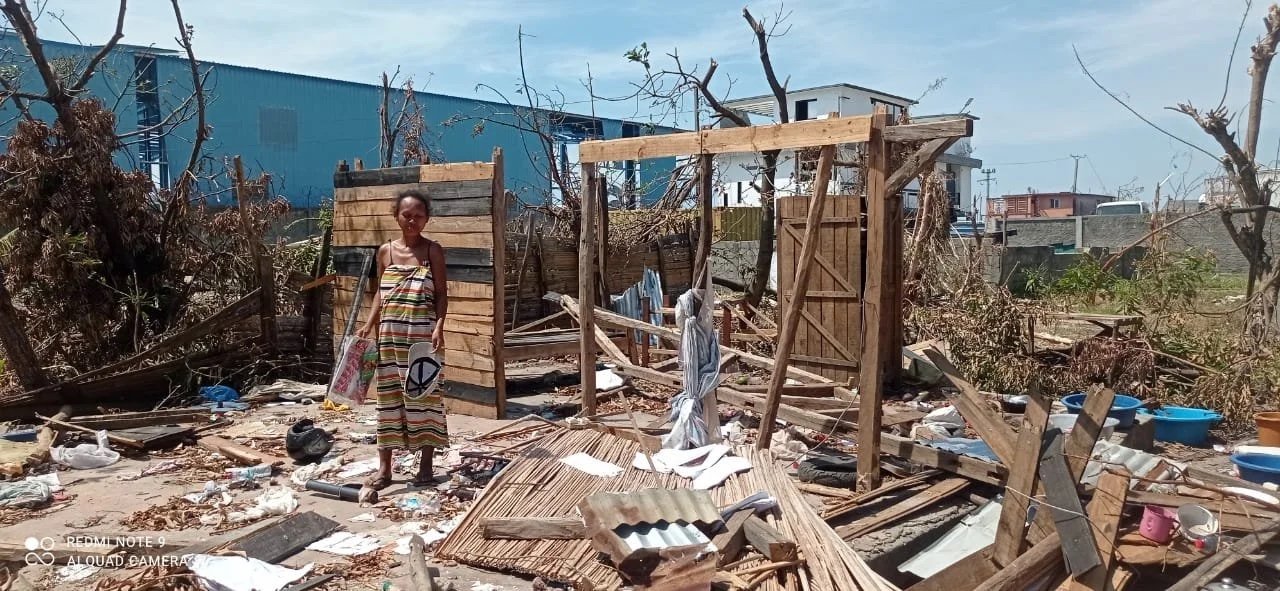
Fruit & Épices: A startup supported by La Fabrique, a business incubator and ally of CRMF, already was active in export markets before the cyclone’s impact. Raw materials were destroyed and, more critically, the main production machine used for processing spices and dried fruits was stolen during the night. This equipment represented the company’s most significant investment and the core of its operations. Despite these losses, the business is attempting a gradual recovery and is striving to fulfill an urgent 50 kg order to maintain client trust and sustain its operations.
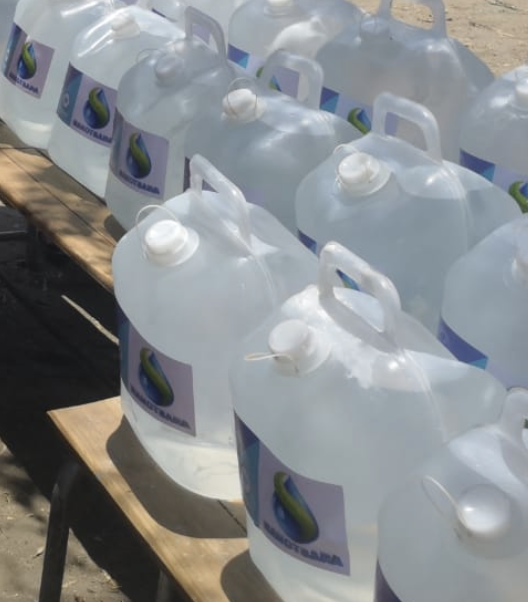
Hope Amid Ruin: Rapid Response One Week After Cyclone Gezani
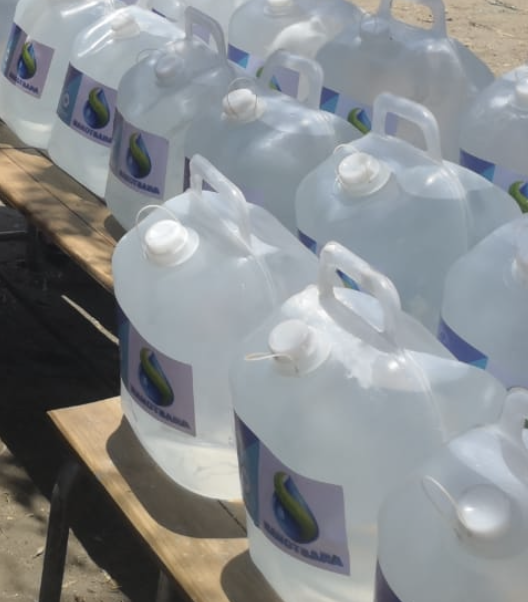
Lack of clean water is one of the greatest threats to survival.
Dispatches from CRMF’s partner, ONG St. Gabriel
An estimated 99 percent of the local population has been affected in the week since Cyclone Gezani tore through Toamasina on Feb. 10 with violent winds and torrential rain.
The scale of devastation varies, but suffering is widespread: Some families lost everything—not a single possession could be saved. Others saw their homes partially destroyed—roofs ripped away, walls damaged. Electricity remains scarce. Many households are standing but flooded, surrounded by contaminated water and unsafe conditions.
Entire communities are exposed to hunger, disease, and darkness.
Among those affected are the staff and beneficiaries of ONG St. Gabriel, CRMF’s longtime partner in Toamasina. Despite their own personal losses, a field team swiftly activated to respond to the cyclone’s devastation—addressing urgent needs, delivering clean drinking water and bringing hope.
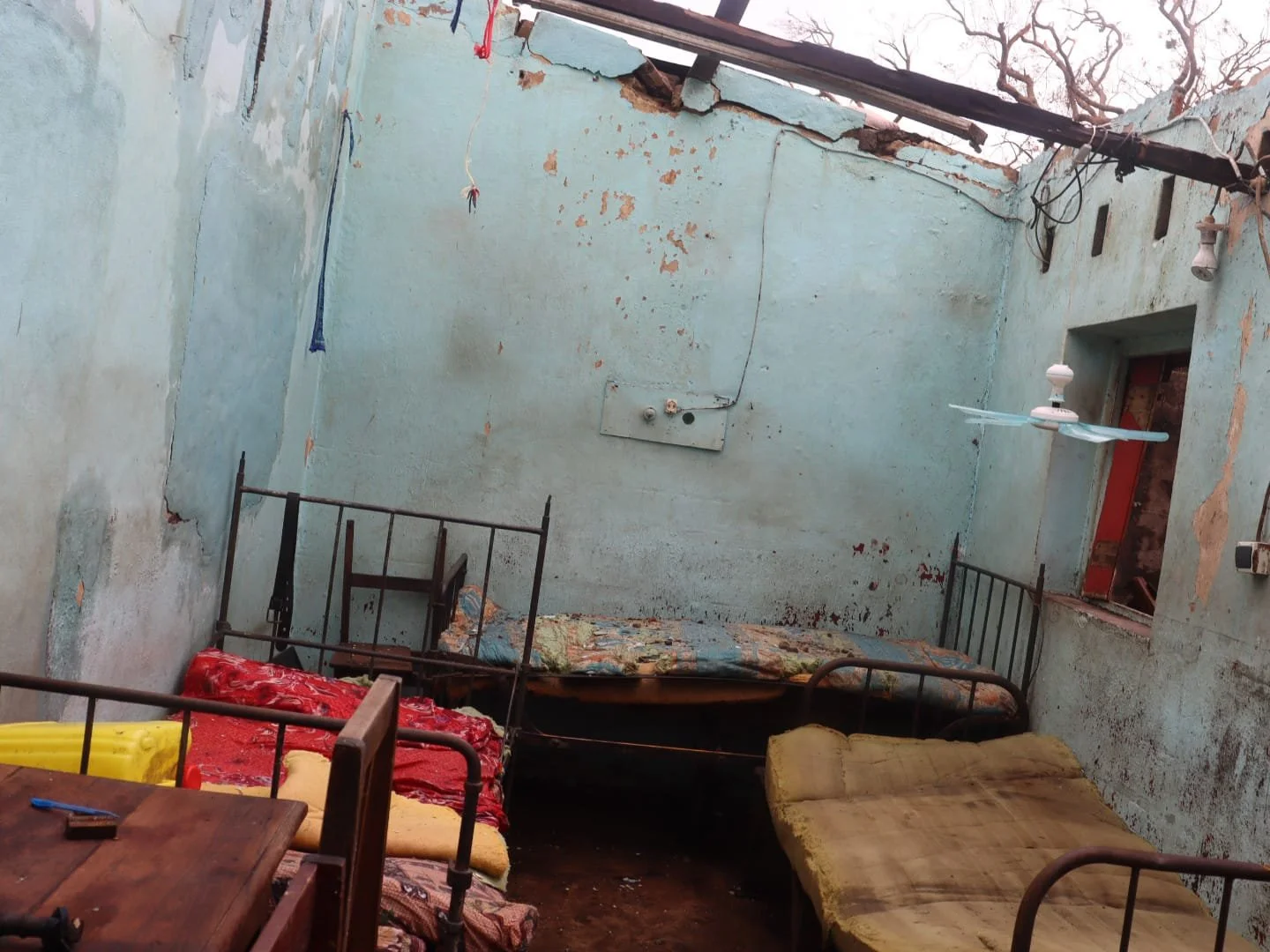
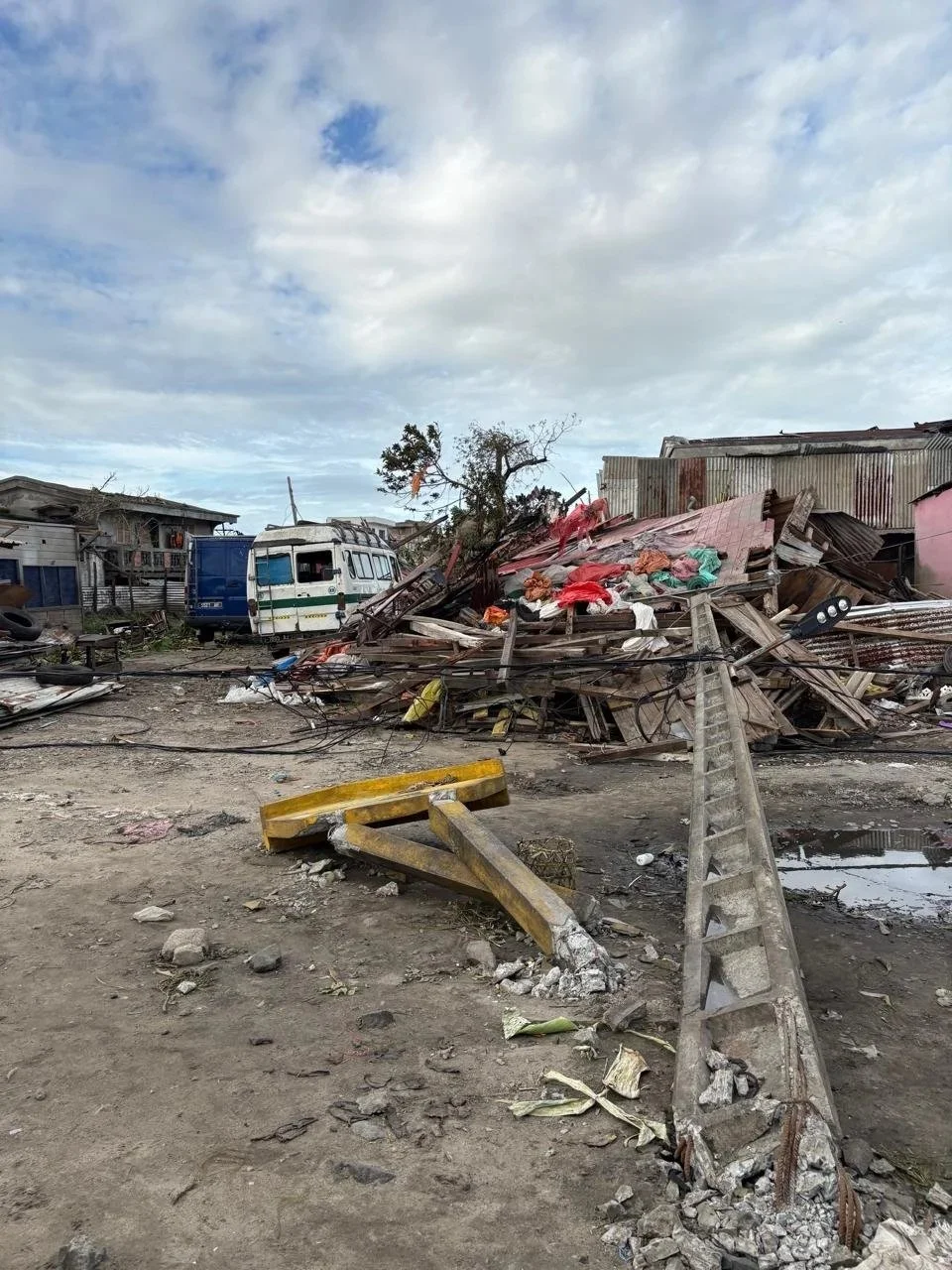
Cyclone Gezani tore through roofs
Rapid Assessment
By Feb. 12, the NGO field team was mobilized. Initial efforts focused on:
Collecting urgent field data
Identifying the most vulnerable households
Assessing damage among beneficiaries
Evaluating immediate survival needs
The findings were alarming. Entire families had lost their belongings. Floodwaters had contaminated living areas. The risk of waterborne diseases rose rapidly.
Field Visits to the Most Vulnerable
On Feb. 13, the team visited the hardest-hit families, including literacy facilitators, and found:
Homes stripped bare by wind
Essential goods washed away
Children sleeping in wet conditions
No electricity
Unsafe drinking water
The situation required immediate life-saving intervention.
Emergency Distribution Begins
On Feb. 14, after prioritizing basic survival needs, emergency distribution began.
Each vulnerable family in NGO teams received:
1 bag of 50kg of rice
Emergency water purification products
Cash assistance, empowering families to buy what they urgently need
Solar lamps, as electricity remains widely unavailable
Cash assistance was particularly critical. In emergencies, families know best what they urgently need—whether medicine, shelter repair materials, or hygiene supplies.
This approach combined food security, health protection, dignity, and autonomy.
The Water Crisis: A Race Against Time
The Ranotsara water purification facility collapsed under the cyclone’s force. However, part of the purification equipment was salvaged.
On Feb. 14, the Ranotsara technical team began emergency repairs. Despite damaged machinery and technical challenges:
Equipment was transported to Toamasina
Installation began at the St. Gabriel School shelter center
Damaged components were repaired
Water containers were disinfected
Water safety testing was conducted
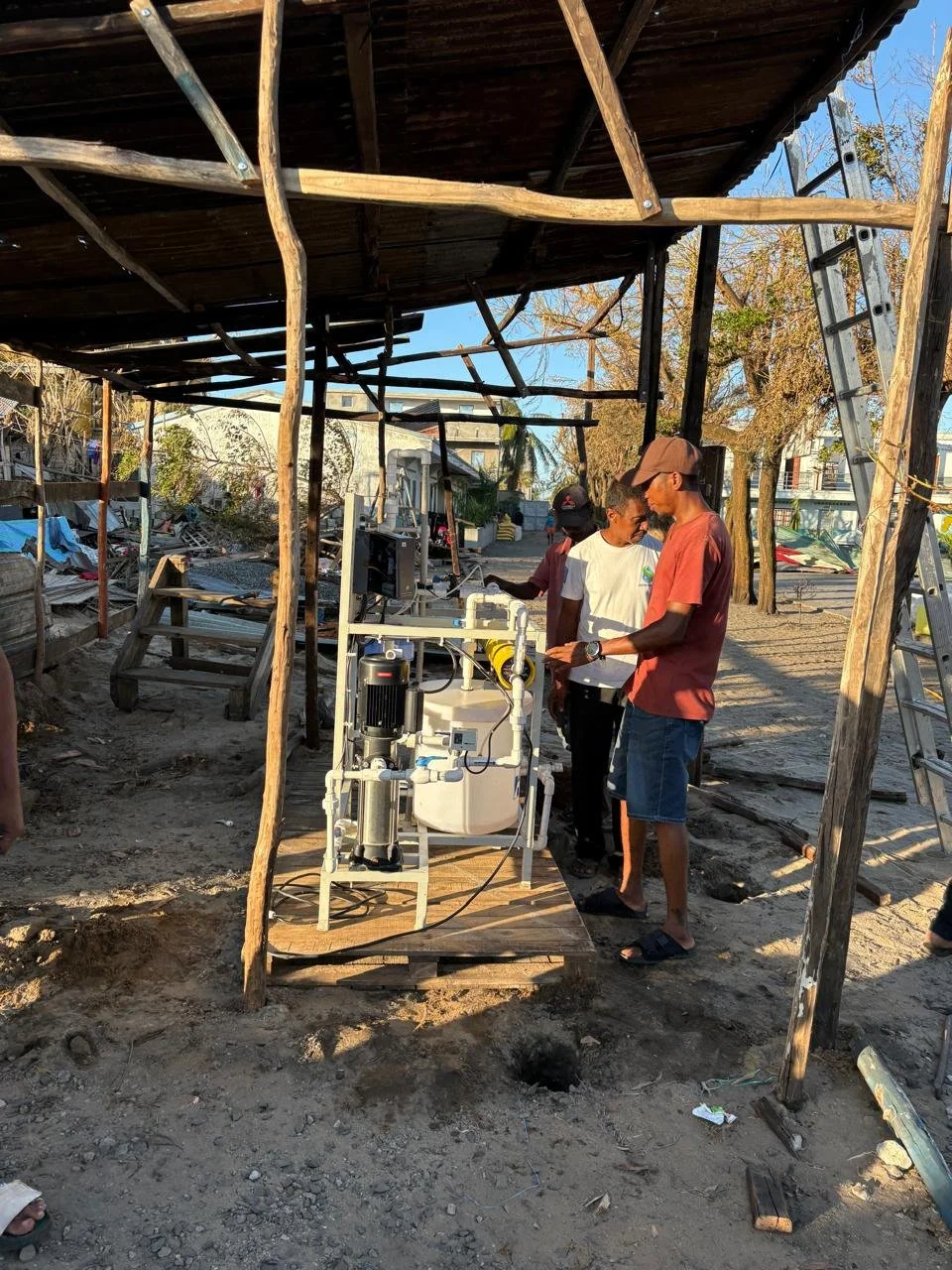
Restoring access to clean drinking water
Organizing The Response
On Feb. 16, ONG St. Gabriel teams held an internal coordination meeting to accelerate response efforts. The objective was clear: Organize, delegate, and act faster.
To ensure efficiency, the team structured responsibilities through a task dispatch system:
Coordination Team: External relations and inter-agency collaboration
Procurement Team: Purchasing essential emergency supplies
Field Team: Rapid needs assessments among beneficiaries and affected communities
Communication Team: Reporting, visibility, and donor information updates
Finance & Accounting Team: Transparency, expense tracking, and compliance
Coordinating Water Relief
On Feb. 16, ONG St. Gabriel’s coordination team joined the official WASH Cluster emergency meeting. The session was led by DREAH (Regional Directorate for Water, Sanitation, and Hygiene).
Key organizations present included:
UNICEF
Médecins Sans Frontières
Action contre la Faim
MEDER
Local and international partners
The cluster meeting focused on:
Sharing updates on ongoing emergency interventions
Identifying who operates in which geographic zones
Avoiding duplication of efforts
Exploring possible collaborations among NGOs
This coordination step is essential to ensure an organized and complementary humanitarian response.
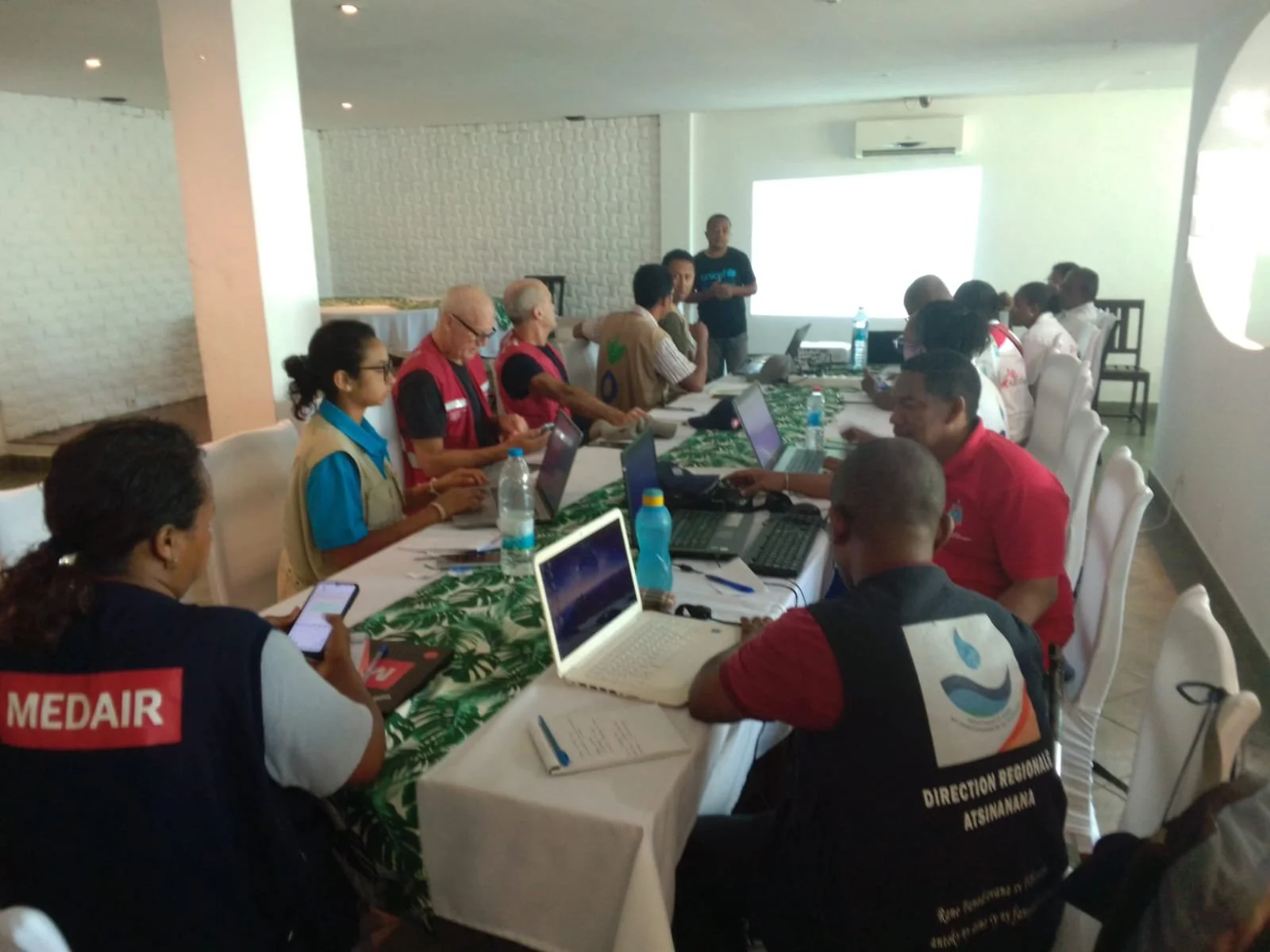
Aid groups unite
Distribution of Purified Water
The distribution of purified water began on Feb. 17 in Toamasina for cyclone-affected individuals sheltered at the St. Gabriel center, as well as residents of the surrounding impacted areas.
The association Manavao was simultaneously supplied to support its teams engaged in street cleaning operations, waste collection, and the removal of fallen trees.
In the afternoon, many residents from nearby neighborhoods also came to collect water.
In response to the emergency, ONG St. Gabriel is providing its purified water brand,
Ranotsara, which has been laboratory-tested by the Institut Pasteur de Madagascar. The water is certified as highly potable and safe for direct consumption.
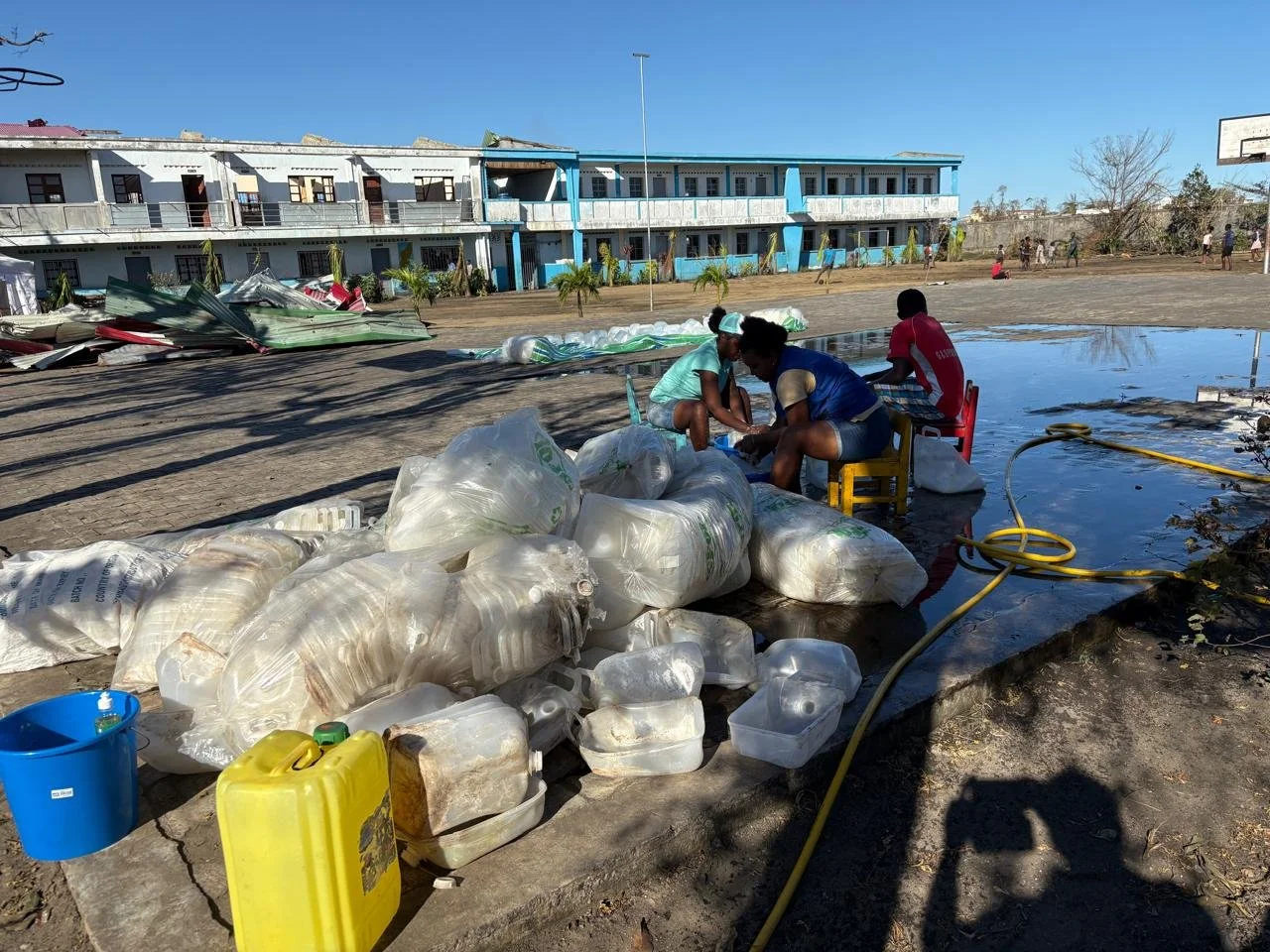
Water flows
Expansion of Safe Water Distribution Sites in Toamasina
In response to recommendations from the WASH Cluster and the growing demand from affected communities, ONG St. Gabriel is expanding its water distribution network across Toamasina.
Four additional shelter sites now are being served:
Foyer Social Canada
David Jhons School
EPP 1904 Antanambao II
EPP La Foire (near Hôpital Kely)
This expansion aims to ensure broader access to the most critical emergency need: safe drinking water. The NGO continues its commitment to providing essential basic needs, with a strong focus on preventing health risks linked to unsafe water consumption.
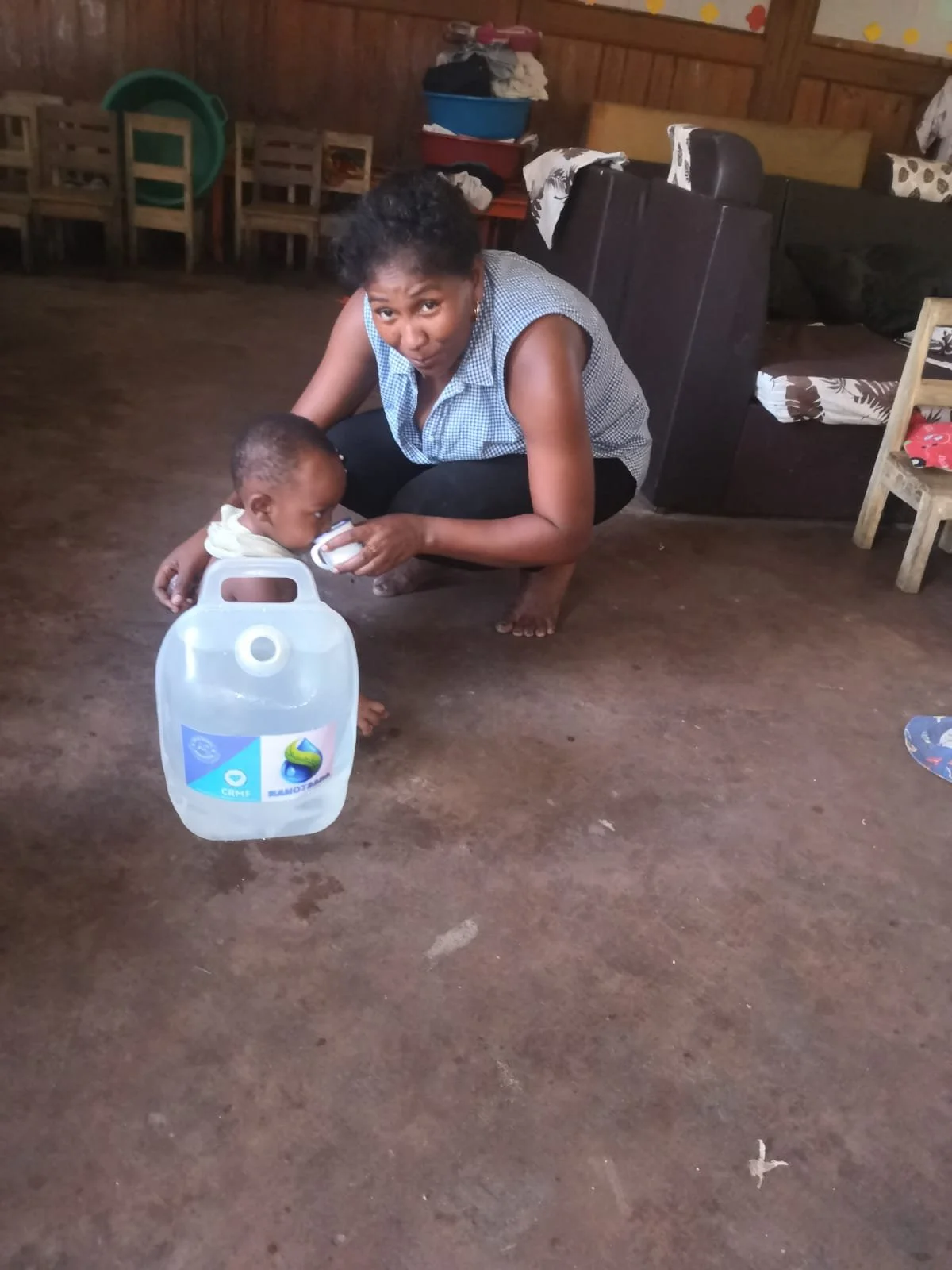
Mrs. Félicitine Judith, teacher at Saint Gabriel College, and her son, Avellin Melvinni (1 year old)
‘Nothing Was Spared’
Video by Minniella Annissou Warda
Video by Minniella Annissou Warda
Cyclone Gezani devastated our friends in Toamasina who are on the front lines to implement CRMF-sponsored programs that deliver education and care to the community. The unrelenting cyclone left them struggling to provide for themselves and their families. Ange, a literacy facilitator, speaking from the rubble that once was her home, said: “We have nowhere to live.” Literacy facilitator Chantal said: “When the cyclone passed through our area, nothing was spared.” Witness the impact of Cyclone Gezani on the people who carry out CRMF projects.
Cyclone Gezani: A Night The Wind Remembered Our Names
On Feb. 10, Cyclone Gezani made landfall in Toamasina, unleashing one of the most devastating storms the region has experienced in decades.
Destruction without discrimination
By Brother Edwin Joseph
Why is nature so violent against some of the poorest people on the planet?
That question kept echoing in my heart as Cyclone Gezani battered our city.
We, the brothers—living in what we believed was a well-protected house—spent a sleepless night. The storm began in the evening. At first, it was only the whistle of the wind. Then it grew into a scream. The walls trembled. Windows shook like frightened children. It was a terrifying experience to feel the speed and fury of the wind, as if the air itself had become a weapon.
Suddenly, we heard shouting outside. The neighbor’s roof was flying away—sheets of metal lifted like paper and carried into the darkness. The coconut tree in the yard, proud and tall, the kind that is supposed to resist cyclones, bent… struggled… and then fell flat on the ground. If such a tree could not stand, what could?
After a short, deceptive silence of about an hour, the winds returned—more violent, more determined. Again, we heard the crashing, the tearing, the metallic cries of roof sheets ripped away and thrown across the night. It was as if the city was being dismantled piece by piece.
And I thought of the millions living in humble settlements—families without solid roofs, hiding behind whatever they could find to shield themselves from the rain and the massive winds. If we were afraid inside our concrete walls, what of those whose only protection was hope?
By early morning, the winds had stopped. The silence was heavy. But life—Madagascar life—was already moving.
People from neighboring quartiers were out, searching through debris, collecting the scattered roof sheets. For some, it meant a little quick money. In the morning light, I saw small shops with weighing machines set up to buy the twisted metal. An economy born in the turbulence of nature. Even little children were helping, dragging pieces of tin almost as big as themselves. Survival has no age.
We took the car to go to our school after hearing that several classrooms had been damaged. But just a few meters from our gate, we were told vehicles could not pass. Trees and electric posts had fallen across the road, blocking everything. So the brothers decided to walk.
I chose another path, heading toward the main city—Place de l’Indépendance, Boulevard Joffre, the hospital, the seaside. What I saw there left me speechless.
Destruction without discrimination.
The poor and the rich—both were victims. Large institutions, offices newly constructed, were shattered. Elegant palm trees that had stood for decades in the Place de l’Indépendance—witnesses of history, symbols of dignity—were uprooted and lying helpless on the ground. A phenomenon almost incomprehensible.
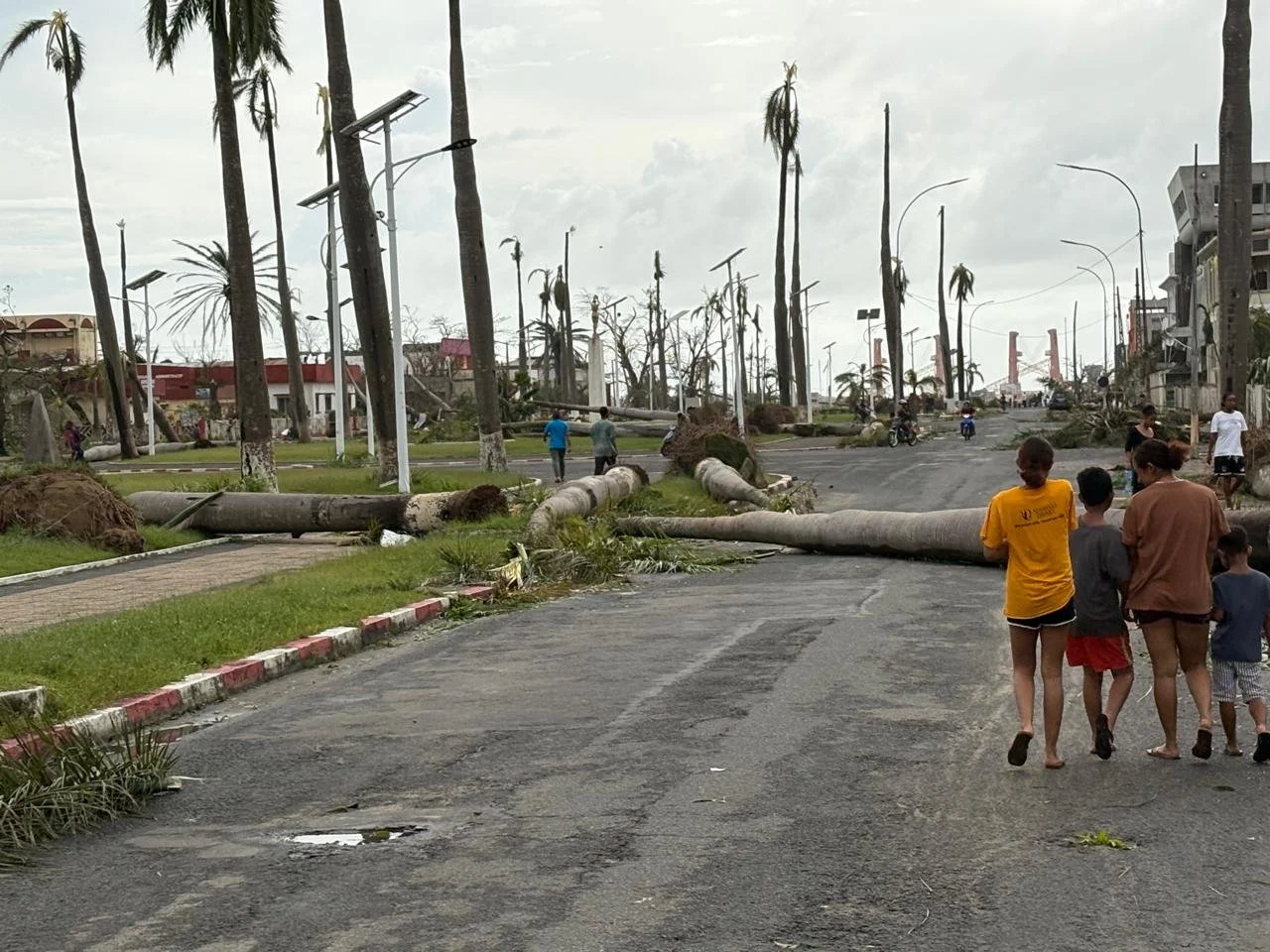
Place de l’Indépendance, after the storm
The big shops. The small street vendors. Everyone was touched.
Mme. Nirina, our cook, told us her story. Only two months ago she had repaired her house with a loan of two million Ariary. This morning, when she went to see it, there was nothing left. No walls. No roof. Just emptiness. Everything was gone.
Some elders say they have never seen such a destructive cyclone. In my 26 years, I have never witnessed one like this.
Electricity, they say, may take weeks to restore, even with JIRAMA teams coming from other regions. Airtel is completely off. As I write, communication is almost impossible. We hope at least that the lines of connection will soon be reestablished—because in moments like this, to hear a voice is to feel less alone.
Seven hours.
Seven hours of nature’s drama have left deaths, homelessness, and families who lost in one night what they had earned over years of sacrifice.
And yet, as I walked through the broken streets, I also saw something else.
I saw people helping each other lift fallen beams. I saw strangers sharing water. I saw children still smiling as they carried pieces of metal. I saw brothers walking calmly toward a damaged school, ready to begin again.
The wind may have torn our roofs, uprooted our trees, silenced our networks—but it did not uproot our solidarity.
Perhaps that is our quiet strength.
Cyclone Gezani has written a painful chapter in our history. But it has also reminded us that even in the poorest corners of the planet, even under the most violent winds, the human heart still stands.
And that, no storm can destroy.
Brother Edwin Joseph in the classroom, September 2025
2025 CRMF Project Visits: ‘We Are The Dreamers’
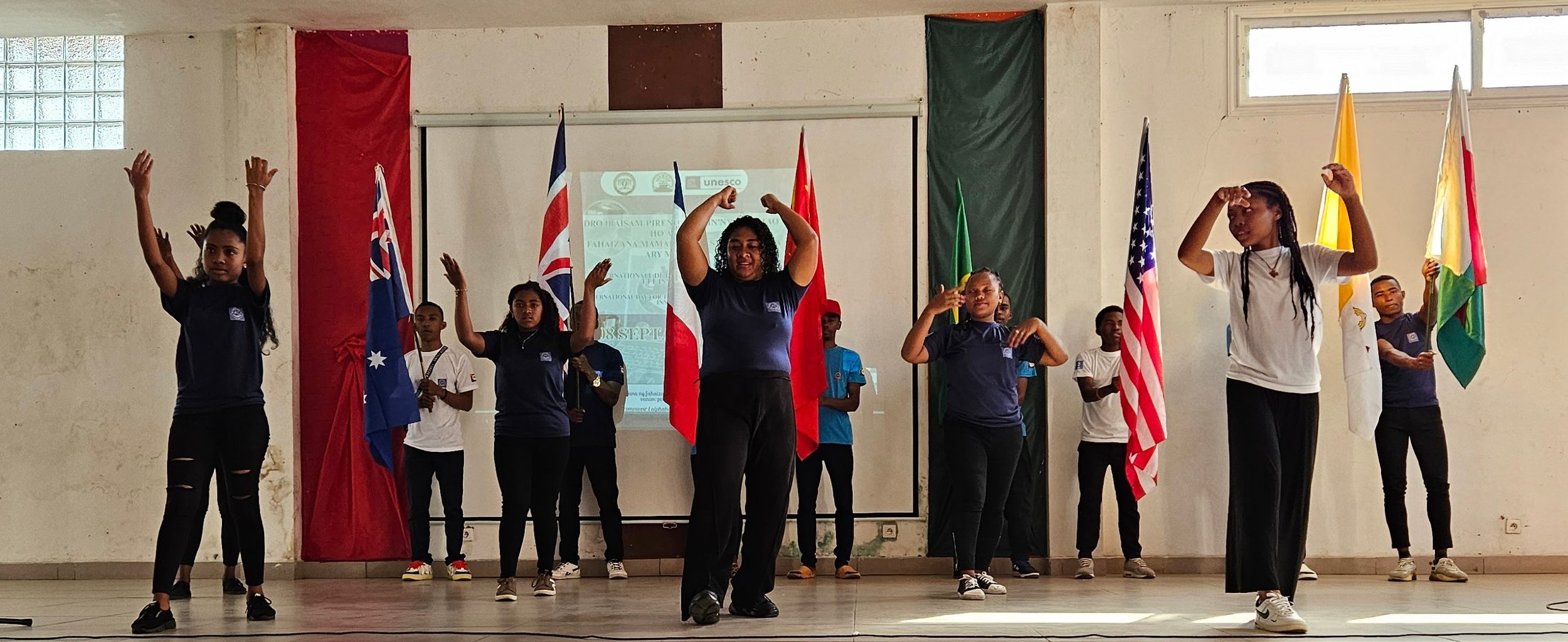
Students from the English language and technology programs sang and danced to "We are the dreamers."
By Ginny Wiltse
“We are the dreamers!” The young adults who sang and danced at the International Literacy Day celebration set the tone not only for that day of festivities but also for the whole September 2025 CRMF team visit to Madagascar. Students enrolled in the technology and English language programs chose the World Cup Soccer Tournament theme song to represent their hopes for the future. Dreamers populate the programs that CRMF funds with the help of our donors. Here are “dreams coming true” stories I heard from them during my time in Madagascar.
Mme. Madeleine inspired the literacy day audience describing how she worked as a laundress in the morning and attended literacy classes in the afternoon. “In everything we do, we need literacy,” she said. She told us that she learned to count, joined a Self-Help Group, saved and bought a chicken, and now has a poultry business.
Self-Help Group members described the Mme. Madeleine lifechanging impact of working collaboratively to become successful entrepreneurs. Mme. Nivo, Co-President of the Fiharemana SHG, explained that her group of 21 women remains strong because they established strict rules for members and they all follow them. They support one another and help each other. When a member of the group died, they paid off her loan together.
Dreaming of economic opportunity
Members of the MISANDRAHAKA SHG have developed businesses making pastry, running a grocery, and selling second-hand clothes, says Mme. Solange, their President.
Mme. Florette, President of the FANASINA SHG, told me how she and members of her group negotiated loans that successfully funded sanitary latrine construction in their neighborhood. “We can see positive change,” commented Jeannie Pacquerette, the ONG St. Gabriel leader of the program.
Students at the technology training center eagerly demonstrated their new language skills for me by telling their stories in English. Last year, CRMF funded the English-language program in response to the students’ request. Sakinah Elizabeth believes that having both computer and English skills will help her land a good job. Khody agrees. He learned English so well that he became an English teacher in the language program! Bryan, Phayo and Donald are proud of their language and technology proficiency.
Montfort Sisters offer vocational training in sewing, culinary arts, and hair styling to girls in the Keeping Girls in School initiative. Sarah, in the 8th grade, uses those skills to earn extra money. Florita completed training as a hair stylist. At their awards ceremony, Ravo, an out-of-school teen who completed certification as a seamstress, told us that she has opened her own sewing business. “Now I have value. I can be a model for other girls,” she commented. Thirty young women celebrated completion of the sewing program during our visit, all wearing dresses they made themselves.
Dreaming of learning and new possibilities
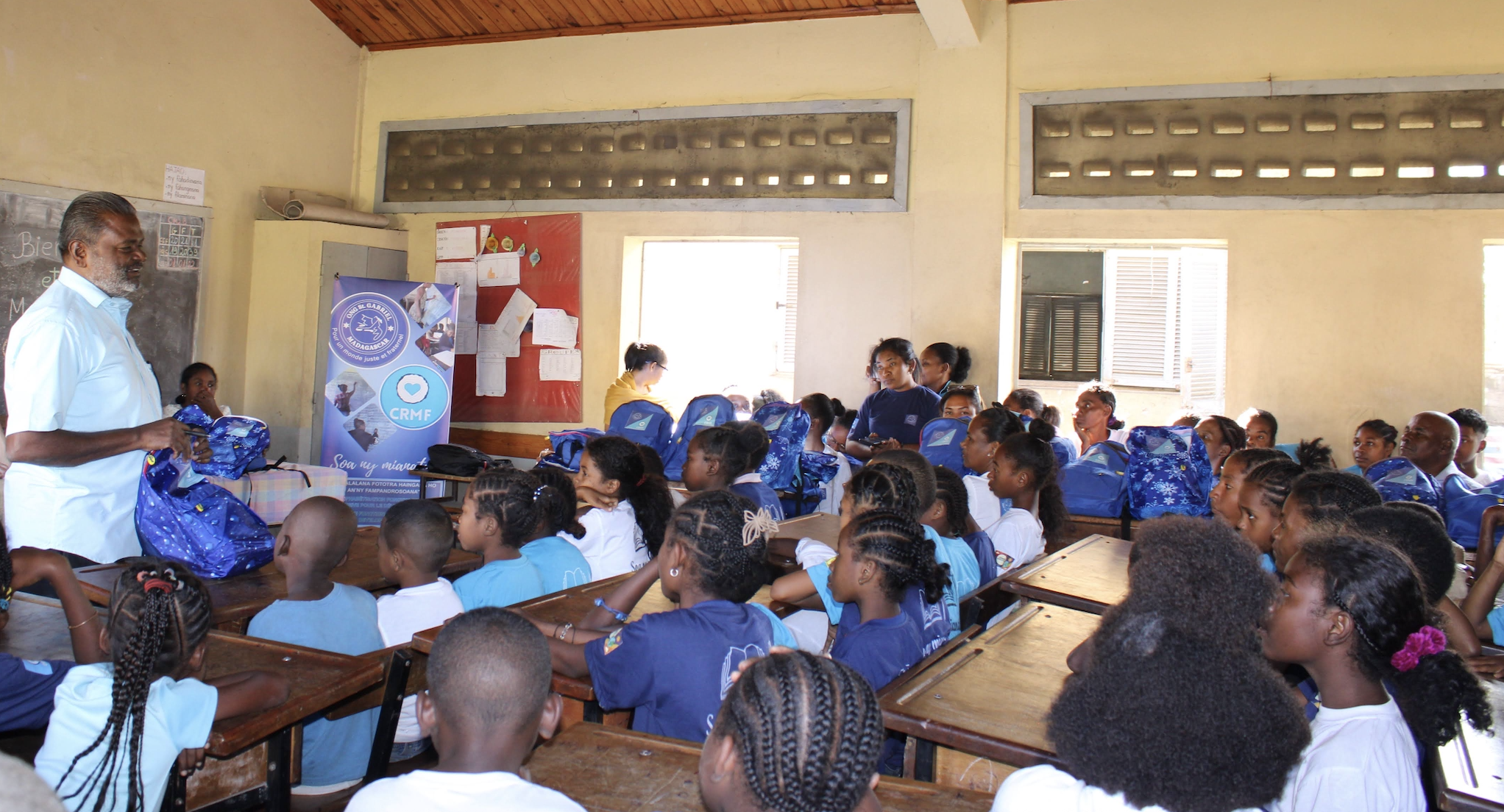
“Who has a dream?” Brother Edwin asked the children assembled at the Analakininina primary school in urban Toamasina. Enthusiasm rippled through the room and the hands flew up. Edie jumped up first. “I want to be a policewoman,” she announced. Ernestine raised her hand: “I want to be a doctor.” There is no shortage of dreams here but the reality is that out of every ten Malagasy children who enter primary school, only four will complete it and only two will go on to middle school. These 50 children come from three public schools and are returning to school this year as part of the CRMF-funded School Reinsertion Program. CRMF pays school registration fees and awards backpacks and school supplies to students whose parents cannot afford to keep them in school. The $8-$10 school registration fee can be almost a week’s wages for parents earning less than $2 a day. Parents, teachers and representatives of the Ministry of Education all expressed thanks for CRMF’s annual participation in this effort.
A first-of-its-kind capacity-building program for women drew an audience of nearly two hundred participants plus local leaders and dignitaries to its launch in rural Antetezambaro on September 11. Mme. Jeannette Nirina, St. Gabriel’s rural projects director, designed the curriculum to meet the needs of women whose lives in remote villages give them few if any opportunities to develop the skills they need to create successful small businesses. It’s an ambitious year-long series of workshops and trainings that cover literacy and leadership, business management, conflict resolution, personal development, and the rights of women. Motivated by dreams of better lives for themselves and their children, the women have already committed to working together through the Self-Help Group model. Groundbreaking and life-transforming! I can’t wait for reports on the progress of this program.
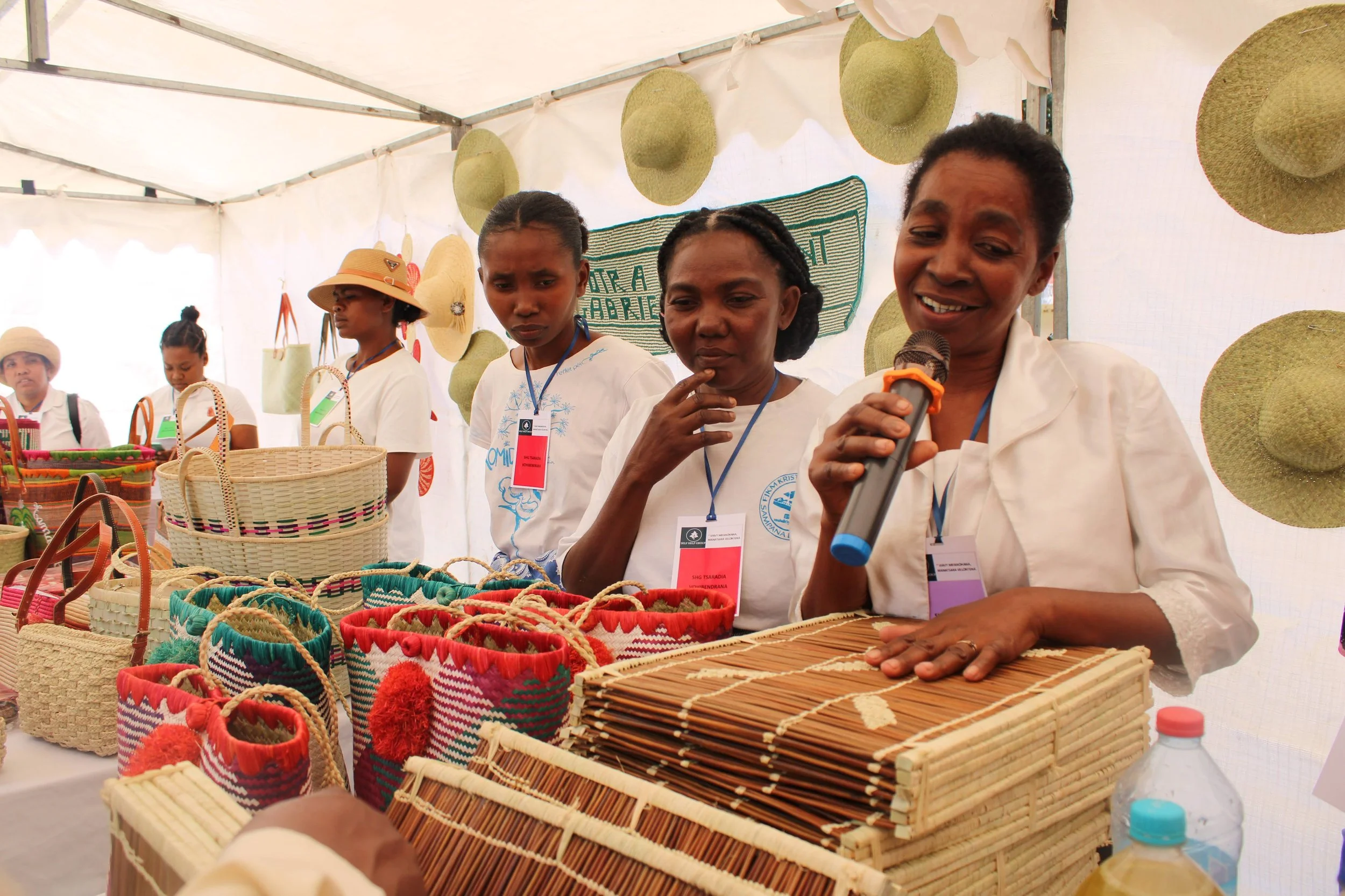
Women from the rural communities display handicrafts at the Antetezambaro gathering. By attending the capacity-building programs and workshops, they strive to realize their dreams of turning their talents into successful income-generating businesses.
Dreaming of reliable healthcare
At Ankirihhiry CSB II, midwives and midwifery students practiced episiotomy suturing techniques and attended lectures in diagnosing and treating hypertension in pregnancy from the CRMF obstetrics team that included TriHealth resident Dr. Wes Gherman, nurse midwife Nancy Baron, obstetric specialist Dr. Heidi McLaughlin, and TriHealth resident Dr. Morgan Boyer. This CSB has the largest maternity service in Toamasina. Its reputation as a safe place for a woman to deliver her baby has grown since CRMF opened its Saving the Lives of Mothers and Babies program there in 2011.
At the Vonjy Center Clinic, the CRMF internal medicine team mentored ten Malagasy medical students who are dreaming of providing better healthcare for the people in their country. The medical students joined CRMF doctors for lectures and clinics in a week-long intensive program focused on best practices in diagnosis and treatment of diseases common in the local setting. TriHealth resident Dr. David Fremlin excelled as a teacher. Reading an Xray at the Vonjy Center required a little creativity from Dr. Fremlin and Dr. Dave Wiltse. Dr. Hux Miller and Dr. Aina Rakotovao and the CRMF team joined the students at a celebratory dinner marking the completion of the mentorship program.
A visit to the Dispensary Antsiramandroso, operated by Montfort Sisters, is always uplifting. This year the whole CRMF team made a joyful visit to the dispensary to admire the new maternity wing.
CRMF donations paid for the flooring in the new facility. Sister Pauline and her staff provide outstanding medical care to the rural poor.
Dreaming of healthy communities
On September 15, the entire rural community of Ambodisaina-Ivondro rejoiced in dreams come true: formal designation by government ministries as a Model Healthy Village. That means the end of open defecation, family latrines for every household, smoke-free cookstoves for every home, AND the dedication of a solar-powered water purification system that will deliver clean, filtered water to everyone, all funded by your donations to CRMF. The village women were quite literally dancing for joy! The festivities included the distribution of certificates of accomplishment to the young women who constructed all the charcoal-free stoves and to the men who constructed (and will maintain) all the latrines for 257 families.
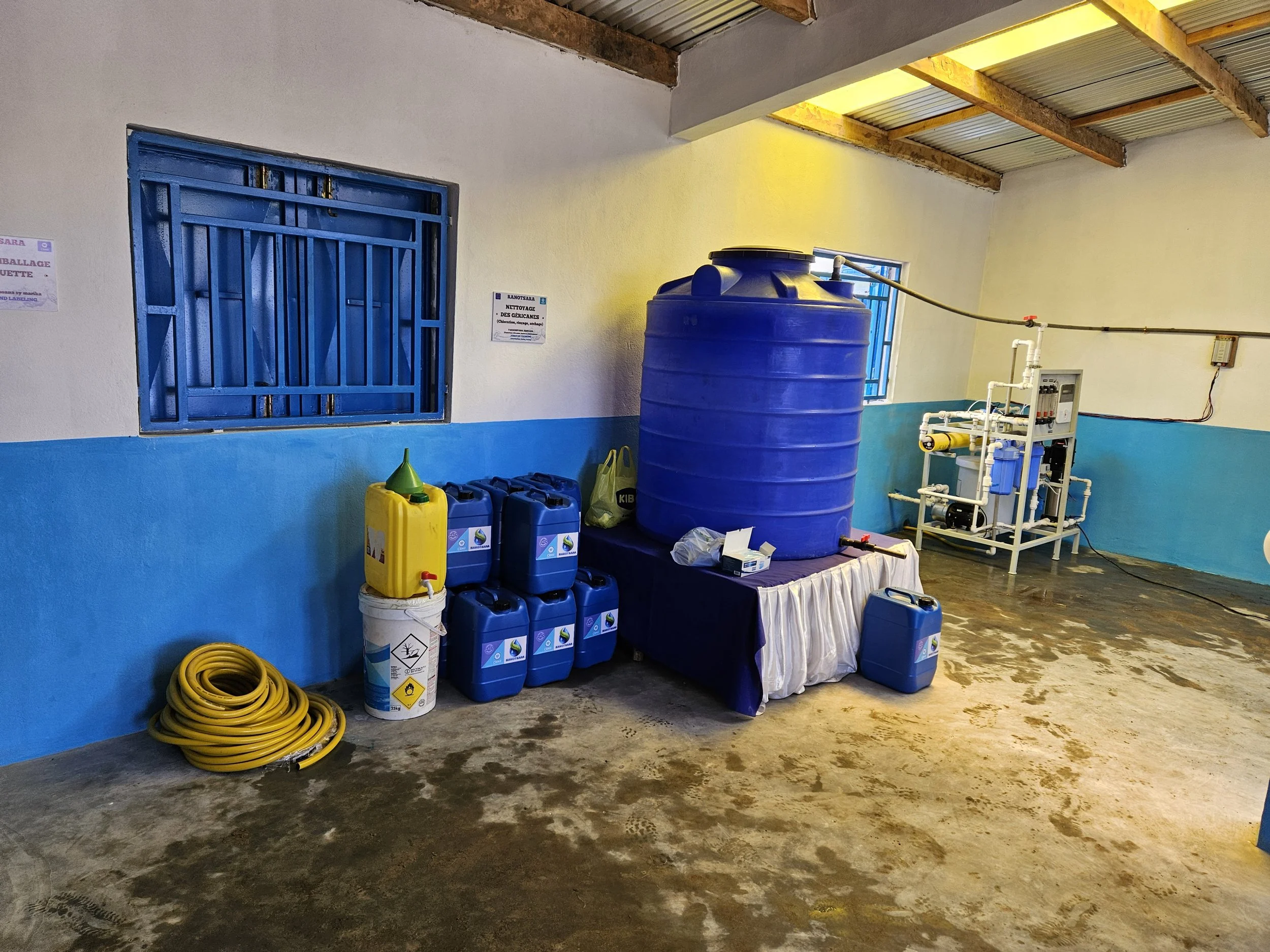
A solar-powered filtering system delivers clean drinking water to the rural community of Ambodisaina-Ivondro.
Further along the Pangalene Canal, the residents of Ambodisiny were waiting for the CRMF team to arrive. They are in the process of becoming a Model Healthy Village and they wanted us to see the progress they had made. It costs less than $100 a person to bring to these villagers the water and sanitation services that make for healthier communities and that we in the United States take for granted.